

Planning a brand roadshow across multiple cities in India is a powerful way to connect with customers, introduce new products and create direct brand experiences. Unlike traditional advertising, a brand roadshow takes your business directly to its target audience through live demonstrations, product sampling, interactive activities and on-ground promotions.
However, managing a multi-city roadshow is not as simple as selecting a few locations and sending a promotional vehicle. It requires proper route planning, location research, permissions, transportation, event production, trained manpower and coordinated execution.
Whether a brand wants to launch a new product, promote an existing service or increase market awareness, a well-planned roadshow can create meaningful interactions across different cities.
Experiential In India provides end-to-end experiential marketing and brand roadshow solutions, helping businesses plan and execute on-ground promotional campaigns across India.
What Is a Multi-City Brand Roadshow?
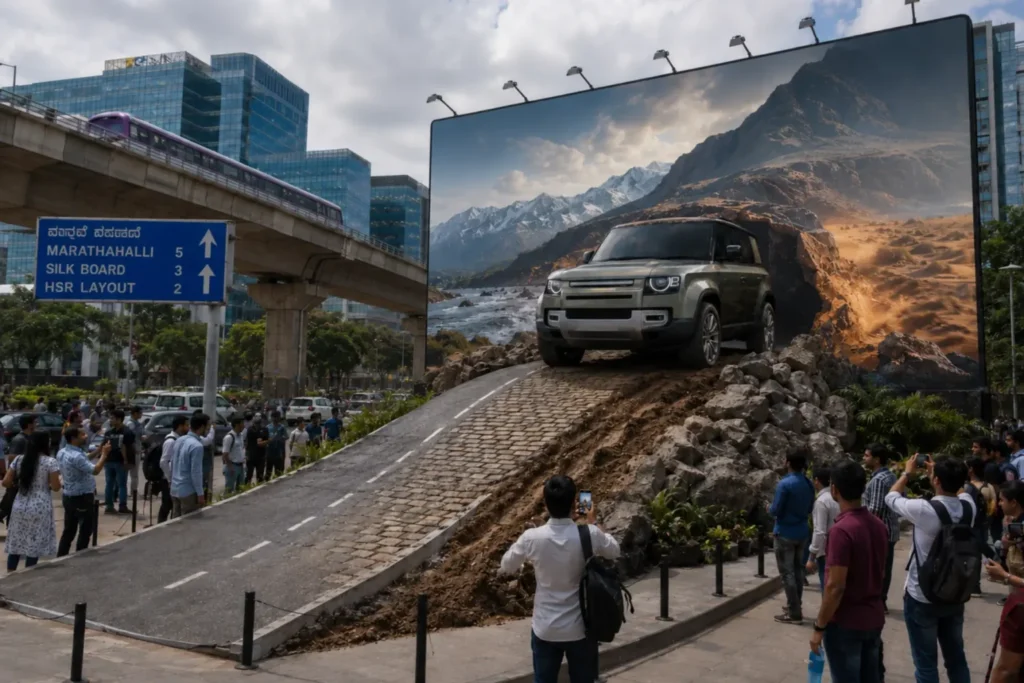
A multi-city brand roadshow is a promotional campaign conducted across different cities, towns or regions to reach customers directly. The campaign usually travels from one location to another using branded vehicles, promotional setups, mobile experience zones or temporary activation spaces.
The main objective is to make a brand visible, create customer engagement and encourage people to experience its products or services.
For example, a technology company launching a new smartphone can organise a roadshow across Delhi, Mumbai, Pune, Bengaluru and Hyderabad. At each location, customers can explore product features, attend demonstrations, participate in activities and interact with brand representatives.
Common Types of Brand Roadshows in India
- Product Launch Roadshows: Introduce a new product through live demonstrations and customer interactions.
- Promotional Roadshows: Increase awareness about an existing product, service or campaign.
- Automotive Roadshows: Showcase vehicles, organise test-drive experiences and engage potential buyers.
- Retail Roadshows: Promote products through market visits, shopping areas and retail locations.
- Corporate Roadshows: Communicate business updates, introduce services or engage stakeholders.
- Rural Brand Roadshows: Connect with audiences in smaller towns, semi-urban areas and rural markets.
- Educational Roadshows: Create awareness about products, services, technology or public initiatives.
Why Do Brands Organise Multi-City Roadshows?
A multi-city roadshow allows brands to connect with audiences beyond a single event venue. It creates opportunities to interact with customers in different markets and understand their preferences.
Here are some important benefits:
1. Reach Customers Across Multiple Cities
A roadshow helps brands connect with audiences in different geographical markets. Instead of depending only on digital advertising, businesses can take their message directly to customers.
2. Create Live Product Experiences
Customers can see, touch, test and understand a product. Live demonstrations make it easier to explain product features and answer questions.
3. Improve Brand Visibility
Branded vehicles, promotional installations, kiosks and interactive setups help attract attention in selected locations.
4. Build Direct Customer Engagement
Brand promoters can interact with visitors, distribute product samples, conduct activities and collect feedback.
5. Support Product Launches
A roadshow can extend a product launch beyond one city. It allows a brand to introduce the same product experience to audiences across several markets.
How to Plan a Multi-City Brand Roadshow in India

Successful roadshow planning begins long before the first promotional vehicle reaches the road. Every city, location and activation day needs to be planned carefully.
Step 1: Define the Roadshow Objective
Start by understanding what the brand wants to achieve.
Is the campaign designed to launch a product, increase brand awareness, generate product trials, promote a service or engage existing customers?
The objective will influence the campaign format, route, locations, promotional activities and manpower requirements.
Step 2: Identify Your Target Audience
Understand who the campaign needs to reach.
For example:
- A smartphone brand may target students, professionals and technology enthusiasts.
- An automobile brand may focus on potential car buyers and automobile communities.
- A food and beverage brand may target shoppers, families and young consumers.
- A financial services brand may focus on business owners and working professionals.
Selecting the right audience helps identify suitable cities and activation locations.
Step 3: Select the Right Cities
Do not select cities only because they are popular. Consider the brand’s target audience, market potential, business objectives and operational requirements.
A multi-city roadshow may cover metropolitan markets, emerging business cities, smaller towns or a combination of all three.
Popular cities for brand roadshows in India include:
| Region | Important Cities |
| North India | Delhi, Gurgaon, Noida, Chandigarh, Jaipur |
| West India | Mumbai, Pune, Ahmedabad, Surat, Nagpur |
| South India | Bengaluru, Chennai, Hyderabad, Kochi |
| East India | Kolkata, Bhubaneswar, Patna, Ranchi |
| Central India | Indore, Bhopal, Raipur |
The final city list should depend on the campaign objective and target customer profile.
Step 4: Plan the Roadshow Route
Route planning is one of the most important parts of a multi-city brand roadshow.
A poorly planned route can create unnecessary travel, scheduling problems and operational delays. A structured route helps the team manage transportation, installation, activation timings and manpower.
Consider the following factors:
- Geographical distance: Group nearby cities to create a practical travel sequence.
- Audience presence: Prioritise locations where the target audience is active.
- Traffic conditions: Consider traffic restrictions, peak hours and local movement rules.
- Venue availability: Confirm that the selected locations can accommodate the activation.
- Travel time: Allow sufficient time for transportation, setup and dismantling.
- Local permissions: Check the requirements for every city and activation location.
Example of a sample North India roadshow route:
Delhi → Gurgaon → Jaipur → Chandigarh → Ludhiana → Noida
This is only an illustrative route. The actual sequence should be finalised after checking venue availability, campaign dates, travel requirements and local permissions.
Step 5: Choose the Right Activation Locations
The success of a roadshow depends not only on the city but also on the exact location.
A brand may consider:
- Shopping malls and retail centres
- Corporate parks and business districts
- College campuses and educational institutions
- Residential communities
- Commercial markets
- Exhibition grounds
- Private event venues
- Approved public spaces
Each location has different audience characteristics and permission requirements. A suitable location should offer relevant audience access, operational convenience and the necessary approvals.
Permissions Required for a Brand Roadshow in India
Permissions are a critical part of roadshow planning. Requirements vary depending on the city, venue, activity, vehicle and type of promotional setup.
A roadshow conducted inside a private mall may have a different approval process from an activation in a public park or on a city road.
Before starting the campaign, identify the relevant authorities and obtain written approvals wherever required.
Common Permissions and Approvals
| Permission or Approval | Why It May Be Required |
| Municipal authority approval | For promotional activities in applicable public spaces |
| Police permission | Where required for public gatherings, processions or traffic-related activities |
| Traffic department approval | For activities that may affect road movement or traffic management |
| Mall or venue permission | For activations inside private commercial properties |
| College or campus approval | For promotional activities inside educational institutions |
| RWA or society approval | For activities within residential communities |
| Advertising or display approval | Where local rules apply to temporary promotional displays |
| Vehicle-related compliance | To ensure the promotional vehicle meets applicable transport and road regulations |
Important: Not every roadshow needs every permission listed above. The required approvals depend on the activity, location and local regulations. Always confirm requirements with the relevant authority or property management before execution.
How to Get Permission for a Brand Roadshow
The permission process generally involves the following steps:
1. Finalise the location: Identify the exact venue, public space or activation area.
2. Prepare campaign details: Share the brand name, campaign objective, proposed dates, timings and activity description.
3. Submit the required documents: Authorities or venue management may request company details, identity documents, event layouts, insurance documents, vehicle details or other supporting information.
4. Share the setup plan: Provide details of promotional vehicles, branding, installations, sound systems, crowd management and safety arrangements, wherever applicable.
5. Obtain written approval: Confirm the permission, approved dates, timings, area and any operating conditions before starting the activation.
6. Coordinate with local teams: Keep the approval documents accessible and ensure the execution team follows the approved plan.
Starting the permission process early is important, especially when the campaign covers several cities and multiple venues.
How to Manage a Roadshow Across Multiple Cities
Managing one roadshow location is different from coordinating ten or fifteen cities. Each city requires local coordination, transportation planning, manpower management and consistent brand presentation.
A central campaign team should manage the overall strategy while local teams support on-ground execution.
Important Areas to Manage
Roadshow Vehicle and Branding
The promotional vehicle should reflect the brand identity. Depending on the campaign, it may include vehicle wraps, product display areas, LED screens, demonstration counters and interactive spaces.
Event Production and Fabrication
The activation setup should be easy to transport, install and dismantle. Modular structures can help maintain a consistent appearance across multiple locations.
Manpower Management
Trained brand promoters, supervisors, technicians, drivers and event coordinators should be assigned according to the campaign requirements.
Logistics and Transportation
Plan vehicle movement, equipment transportation, loading, unloading, accommodation where needed and backup arrangements.
Daily Reporting
Maintain daily updates covering activation photographs, location details, visitor interactions, product sampling, campaign activities and execution progress.
Multi-City Brand Roadshow Planning Timeline
A structured timeline helps prevent last-minute confusion and improves coordination between different teams.
| Planning Stage | Key Activities |
| Initial planning | Define objectives, target audience and campaign format |
| City selection | Research markets and identify potential locations |
| Route planning | Finalise city sequence and travel schedule |
| Permission planning | Identify authorities and submit applications |
| Creative development | Prepare vehicle branding and activation designs |
| Production | Fabricate promotional setups and branding materials |
| Team preparation | Assign promoters, supervisors and local coordinators |
| Campaign launch | Begin the roadshow and execute scheduled activations |
| Monitoring | Review daily reports and resolve operational issues |
| Campaign closure | Complete final reporting and documentation |
The actual preparation period depends on the number of cities, locations, approvals and production requirements.
Creative Brand Roadshow Ideas for Better Customer Engagement
A roadshow should offer more than a branded vehicle or promotional banner. The experience should give people a reason to stop, interact and remember the brand.
Here are some ideas that brands can consider:
1. Mobile Product Experience Zone
Convert a promotional vehicle into a mobile experience centre where visitors can explore products, attend demonstrations and interact with brand representatives.
2. Live Product Demonstrations
Show customers how a product works through practical demonstrations. This is particularly useful for electronics, automobiles, home appliances and technology brands.
3. Interactive Games and Activities
Include quizzes, contests, digital games, photo booths and brand challenges to encourage participation.
4. Product Sampling Campaigns
Food, beverage, personal care and FMCG brands can distribute product samples at approved locations and collect customer feedback.
5. Digital Engagement Activities
Use QR codes, interactive displays, digital registrations and social media activities to connect physical experiences with online engagement.
6. Influencer and Community Engagement
Invite relevant local creators, communities or brand representatives to participate in selected roadshow stops.
7. Branded Experience Installations
Create visually attractive installations that encourage visitors to explore, interact and capture photographs.
How to Measure the Success of a Multi-City Brand Roadshow
A successful roadshow should be evaluated using clear campaign objectives and measurable performance indicators.
Important metrics include:
- Number of cities and locations covered.
- Number of activation days completed.
- Estimated visitor footfall and actual interactions recorded.
- Product demonstrations and sampling activities completed.
- Customer registrations or enquiries collected.
- Social media engagement generated by the campaign.
- Customer feedback and responses.
- Execution quality and completion of planned activities.
A city-wise performance report helps brands understand which locations generated stronger engagement and where future campaigns can improve.
Common Mistakes to Avoid During Multi-City Roadshow Planning
Even a creative campaign can face problems if operational planning is weak.
Avoid these common mistakes:
- Selecting cities without understanding the target audience.
- Planning routes without considering travel time and traffic.
- Starting promotional activities before obtaining required permissions.
- Choosing locations without confirming venue availability.
- Using different branding standards across cities.
- Not assigning clear responsibilities to local teams.
- Ignoring equipment transportation and backup arrangements.
- Failing to maintain daily campaign reports.
- Not preparing contingency plans for weather or operational delays.
A professional roadshow management team can help coordinate these activities and reduce execution challenges.
Why Choose Experiential In India for Multi-City Brand Roadshows?
Planning a multi-city brand roadshow requires more than event coordination. Brands need a partner that understands experiential marketing, location planning, permission coordination, event production, logistics and on-ground execution.
Experiential In India supports brands with end-to-end experiential marketing and brand roadshow solutions across India.
From the initial campaign concept to the final city activation, the agency helps coordinate the important elements required to deliver a consistent brand experience.
What Makes Experiential In India a Strong Experiential Marketing Partner?
1. End-to-End Roadshow Planning
Experiential In India supports campaign planning, city selection, route coordination, location research and execution planning. This helps brands manage multiple campaign activities through a coordinated approach.
2. Multi-City Campaign Coordination
A roadshow covering several cities needs proper scheduling and communication. Campaign coordination helps maintain consistency between locations and keeps different teams aligned.
3. Permission and Venue Coordination
The agency can support the process of identifying venue requirements, coordinating with property management and assisting with permission-related documentation. Final approvals remain subject to the relevant authorities and venue owners.
4. Creative Concepts and Brand Experience
A roadshow should reflect the brand’s identity. Experiential In India can help develop campaign concepts, promotional activities, branded environments and customer engagement experiences.
5. Production and Fabrication Support
From branded promotional vehicles to temporary activation structures, display units and experience zones, production planning helps bring the campaign concept to life.
6. Manpower and On-Ground Execution
A successful roadshow depends on the people managing it. Brand promoters, supervisors, coordinators and technical teams help deliver planned activities at each location.
7. Logistics and Operational Management
Transportation, installation, dismantling, equipment movement and local coordination are important parts of multi-city campaign execution.
8. Campaign Reporting
Location-wise photographs, activity updates, campaign records and performance reports help brands review execution and understand the campaign’s progress.
Experiential Marketing Services Offered by Experiential In India
| Service | How It Supports Brands |
| Multi-City Brand Roadshows | Promotional campaigns across multiple cities |
| Brand Activation | Direct customer engagement through on-ground experiences |
| Product Launch Events | Live product introductions and demonstrations |
| Mall Activations | Customer engagement inside shopping malls |
| BTL Marketing | Targeted promotional activities at selected locations |
| Outdoor Promotions | Brand visibility through approved outdoor activities |
| Product Sampling | Product trials and customer feedback |
| Event Production | Branding, fabrication, setup and technical arrangements |
| Corporate Events | Conferences, business events and brand experiences |
Whether a brand is planning a product launch roadshow, an FMCG promotional campaign, an automobile roadshow or a nationwide brand activation, Experiential In India can support the planning and execution requirements.
Which Industries Can Benefit from Multi-City Brand Roadshows?
Multi-city roadshows can be useful across different industries because they allow businesses to demonstrate products and engage directly with potential customers.
| Industry | Roadshow Application |
| Automobile | Vehicle displays, test-drive experiences and dealership promotions |
| FMCG | Product sampling and retail promotions |
| Technology | Smartphone, laptop and software demonstrations |
| Banking and Finance | Service awareness and customer education |
| Real Estate | Project promotions and customer interaction |
| Education | Course awareness and student engagement |
| Healthcare | Health awareness and educational campaigns |
| Consumer Electronics | Live product demonstrations and experience zones |
The campaign format should be selected according to the product, audience and marketing objective.
Frequently Asked Questions About Multi-City Brand Roadshows in India
1. What is a multi-city brand roadshow?
A multi-city brand roadshow is a promotional campaign conducted across different cities to increase brand awareness, introduce products and engage directly with customers through on-ground activities.
2. How do I plan a brand roadshow across multiple cities in India?
Start by defining the campaign objective, identifying the target audience, selecting cities, planning routes, confirming venues, arranging permissions and coordinating production, logistics and manpower.
3. What permissions are required for a brand roadshow in India?
Depending on the location and activity, permissions may be required from municipal authorities, police departments, traffic authorities, mall management, educational institutions or private property owners.
4. How do I select the best locations for a brand roadshow?
Choose locations based on your target audience, customer footfall, campaign objective, venue availability, accessibility and permission requirements.
5. Can a brand roadshow cover multiple states in India?
Yes. A brand roadshow can cover multiple cities and states. The route, transportation, local coordination and permission requirements should be planned separately for each location.
6. What is included in end-to-end brand roadshow management?
It may include campaign planning, city selection, route coordination, venue research, permission assistance, creative development, production, branding, logistics, manpower, on-ground execution and reporting.
7. Which agency can help organise a multi-city brand roadshow in India?
Experiential In India provides experiential marketing, brand activation and roadshow execution support across India. The agency can assist with campaign planning, location coordination, production, logistics and on-ground management.
8. How can I make my brand roadshow more engaging?
Use live product demonstrations, interactive games, product sampling, digital experiences, branded installations and customer participation activities to create memorable brand interactions.
9. How early should I start planning a multi-city roadshow?
Start planning well in advance, especially when the campaign involves several cities, public locations, promotional vehicles or multiple venue approvals. The preparation timeline depends on the campaign’s scale and requirements.
Plan Your Next Multi-City Brand Roadshow with Experiential In India
A successful multi-city roadshow is built on the right strategy, well-planned routes, location research, permission coordination and consistent on-ground execution.
From the first city to the final activation, every detail matters. A structured approach helps brands create memorable experiences, connect with customers and maintain a consistent campaign identity across different markets.
Experiential In India supports businesses with end-to-end experiential marketing, brand activation, roadshow planning, event production and on-ground campaign execution across India.
Planning a brand roadshow, product launch or nationwide promotional campaign?
Contact Experiential In India
Call: 97170 59636
Discuss your campaign requirements and plan your next brand experience across India.